

Canadian taxpayers are covering the difference as corporations are shifting billions in profits out of the country to tax havens, says a new report from the tax justice group Canadians for Tax Fairness.
The group’s latest report, looking at offshore profit shifting in Canada, shines a light on the elaborate accounting tricks multinational corporations use to shift profits to offshore tax havens and avoid paying billions of dollars in taxes in Canada each year.
Some of Canada’s biggest tax abusers, according to the tax justice group, include big multinational corporations operating in the oil, gas and mining industries, which have collectively avoided paying billions of dollars in taxes in Canada over the last several years.
“We estimate that just 26 multinational corporations have shifted $45 billion of profits out of Canada and $89 billion into tax havens since 2018,” the report states. “Had these corporations recorded their profits in Canada in accordance with their real economic activity, Canada could have raised an additional $12 billion in corporate income tax revenue.”
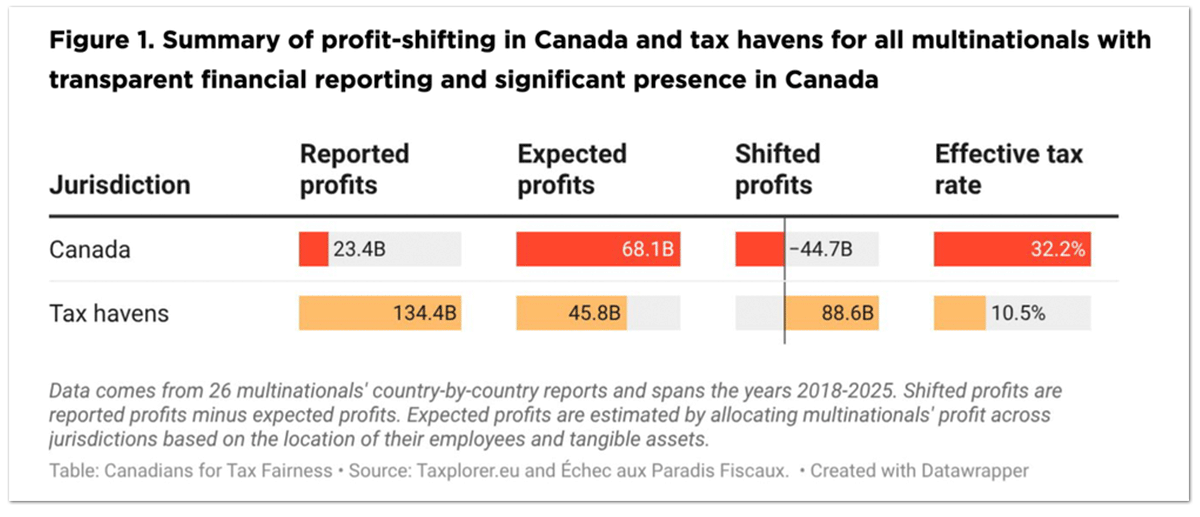
The report focuses on “profit shifting,” a corporate tax avoidance strategy it describes as “one of the principal ways corporate tax abuse takes place.”
“Profit shifting occurs when a multinational corporation shifts its profits from the location of real economic activity to lower-tax jurisdictions,” the report explains. “This lowers their overall tax bill because their profits are taxed at a lower rate in the tax haven than in the jurisdiction where the profits were actually generated.”
The report adds that “although there are some legal restrictions on profit shifting, there are many legal ways that corporations shift profits.”
While these numbers are big, the true amount of tax revenue Canada is losing as a result of profit-shifting tax avoidance strategies is likely significantly bigger.
“We have no idea what the number could be,” Silas Xuereb, an economist and policy analyst with Canadians for Tax Fairness told The Watchdog.
“We still don’t have good data on this for Canada,” Xuereb explained, pointing out “Canada does not require multinationals to publish country-by-country tax and financial data the way other countries like Australia and the European Union have started to do now.”
Xuereb said the report offers only a limited snapshot of the true scope of the problem, noting the 26 companies highlighted in the report represent “less than 1% of multinationals that operate in Canada.” And the main reason Canadians are able to access any data at all is largely thanks to other jurisdictions forcing these companies to publicly disclose their country-by-country profits.
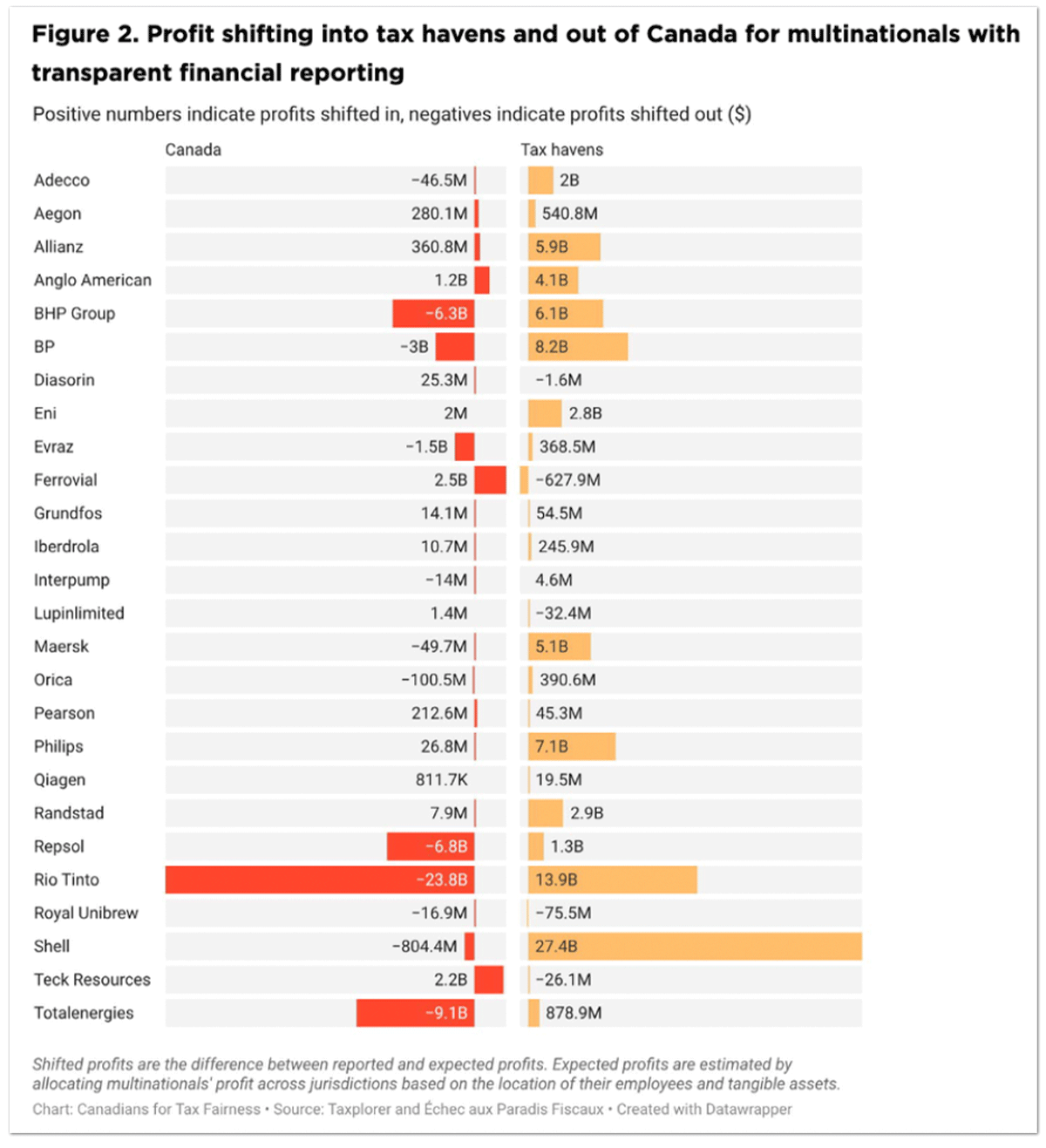
The report lists a number of major oil, gas and mining companies, including Shell, BP, BHP, Repsol, TotalEnergies and Anglo American, among the biggest names transferring profits out of Canada and into tax haven countries. However, that’s also partly due to multinationals in these industries operating in jurisdictions that force them to publish data on country-by-country profits.
“We know that a lot of the biggest tax abusers in Canada are companies like Brookfield and the Royal Bank of Canada and the other big banks,” Xuereb noted. “We still don’t have good data on what they're doing.”
Of the companies that do publish country-by-country data, the multinational mining conglomerate Rio Tinto, which bills itself as the “largest mining and metals company in Canada,” is identified by the report as “one of the best examples of profit-shifting.”
Rio Tinto runs numerous mining operations across Canada, including iron and titanium mines in Québec and Labrador and a large diamond mine in the Northwest Territories.
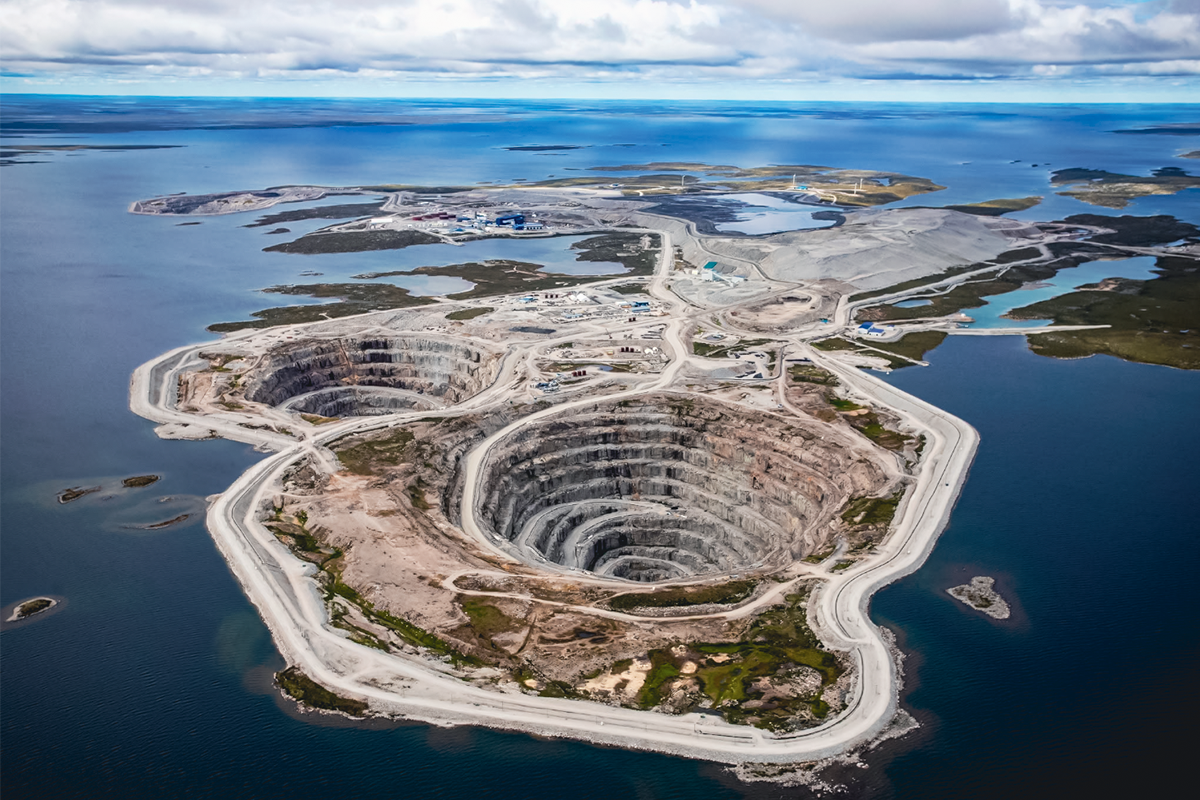
According to Canadians for Tax Fairness, Rio Tinto has recorded $13.1 billion in profits in Canada since 2018. At the same time, Rio Tinto’s subsidiaries recorded $16 billion in profits in tax haven jurisdictions despite having over 12,000 employees in Canada and roughly 500 employees in tax haven countries.
“From public records, it is impossible to say exactly why Rio Tinto’s Canadian profits are so low compared to its assets and employees in Canada,” the report says. “However, we can see that 68% of the revenue reported by Canadian subsidiaries of Rio Tinto comes from sales to other Rio Tinto subsidiaries.”
The report highlights that a significant amount of the company’s global profits is transferred to a subsidiary in Singapore where the company pays a 3% tax rate.
It also highlights Rio Tinto’s practice of transferring diamonds mined in Canada to a Belgian subsidiary, “providing one avenue through which transfer mispricing could be used to shift profits out of Canada” (Rio Tinto’s own corporate documents note that its operations in Belgium benefit from the country’s special tax rules for diamond dealers).
Canadians for Tax Fairness also highlights that Rio Tinto operates holding companies in Bermuda and the British Virgin Islands, despite the mining company reporting zero employees or tangible assets on these Caribbean islands.
Rio Tinto’s most recent country-by-country report, which the company provided to The Watchdog, shows those offshore holding companies are linked to its mining operations in Mongolia, Madagascar and Canada. One of those Bermuda-based subsidiaries holds a 56.7% ownership stake in the Iron Ore Company of Canada, which operates an open-pit mine outside Labrador City.
Despite this, Rio Tinto said it “does not accept the characterization that it shifts profits between jurisdictions as a strategy to avoid tax.”
“Rio Tinto is committed to complying with the tax law and regulations of the countries in which we operate, including Canada, and to paying the taxes that are properly due in those jurisdictions,” a company spokesperson told The Watchdog.
The company highlighted that it paid $9.9 billion in taxes across more than 30 countries in 2025 and noted that its Chief Financial Officer has described Rio Tinto as a “leader in transparent tax reporting.”
It also said it takes issue with the methodology Canadians for Tax Fairness used to create its estimates, arguing that “the location of employees and tangible assets alone does not determine where profits arise or where they are taxable.”
“Employees, assets and sales are good, widely used indicators of real economic activity,” Xuereb replied, citing work by other academics and researchers. “The fact that we see a pattern of more profits being reported in tax havens than expected across most multinational corporations makes clear that forms of profit shifting are still occurring.”
Xuereb also made clear that Canadians for Tax Fairness is “not alleging that anything illegal is happening.”
“Under current laws, companies like Rio Tinto are free to structure their ‘economic activities, functions and risks’ across jurisdictions so that their profits can be reported disproportionately in low-tax jurisdictions.”
Canadians for Tax Fairness argues tax revenue lost through profit shifting has the effect of shifting the tax burden from corporations to ordinary Canadian taxpayers and depriving governments of billions of dollars that could be better used to “fund public services and infrastructure.”


